
Special Events That Helped Save Us

Special Events That Helped Save Us

Special Events That Helped Save Us!

When talking about chamber memberships back in the 1980s, 1990s, and even the early 2000s, one thing was fairly common…membership investments (we called them dues back in those days) were the primary driver of revenue for the organization.  If we had a membership directory, we would sell the advertising and put the directory together, or we’d hire an outside company to sell the advertising, put it together, print it and then deliver it to us…and share a portion of the profits from the ad sales.

A funny thing started happening in the 2000s…consolidations of banks, cutting mid-level employees at larger corporations, reduced volunteer involvement, and an increase in the number of ‘networking opportunities’…and suddenly, chambers of commerce that had become complacent in their operations were finding their relevancy beginning to wane. Special events…business expos, golf tournaments, and awards banquets…all took on greater financial meaning for organizations looking to stand out against networking competition.

The special event was nothing new to chambers of commerce (I mean who didn’t love a good Citizen of the Year banquet?), but up to then, their significance in contributing to the bottom line of the organization was minimal at best.  Themed events began to show significant involvement, growth, and of course financial impact.  The Chamber golf tournament became a Golfing Event complete with contest holes, long drives, and even chances to beat a pro golfer, and suddenly these events were raking in huge sums of money…coupled with live and silent auctions.  Business Expos turned an ordinary trade show into a community-wide event with exhibitors from almost every business category regardless of whether they were business to consumer or business to business…it was another revenue opportunity for the organization to replace lost membership dollars.

Today, special events are still a part of the Chamber of Commerce program of work.  The Granbury Chamber of Commerce holds an annual golf classic that continues to bring 25-30 teams each year.  It’s an important part of the organization’s identity.  These events are great ways to build relationships, and at the same time help the chamber’s bottom line.  However, about 20 years ago, a revolution started happening – first on the west coast, and then in Texas –  that would bring back the focus on chamber memberships.  We still love our events, but recognize that other organizations are competing for the same dollars from businesses in our communities…we must continue to evolve!

Written by Brian Bondy, IOM
Granbury Chamber President and CEO
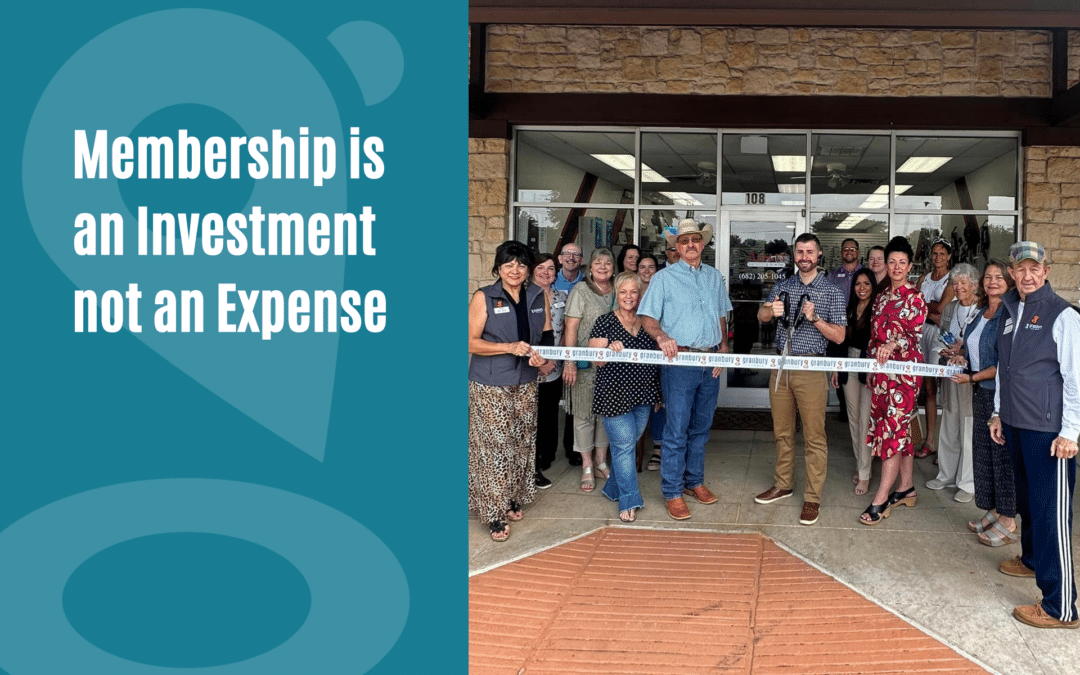
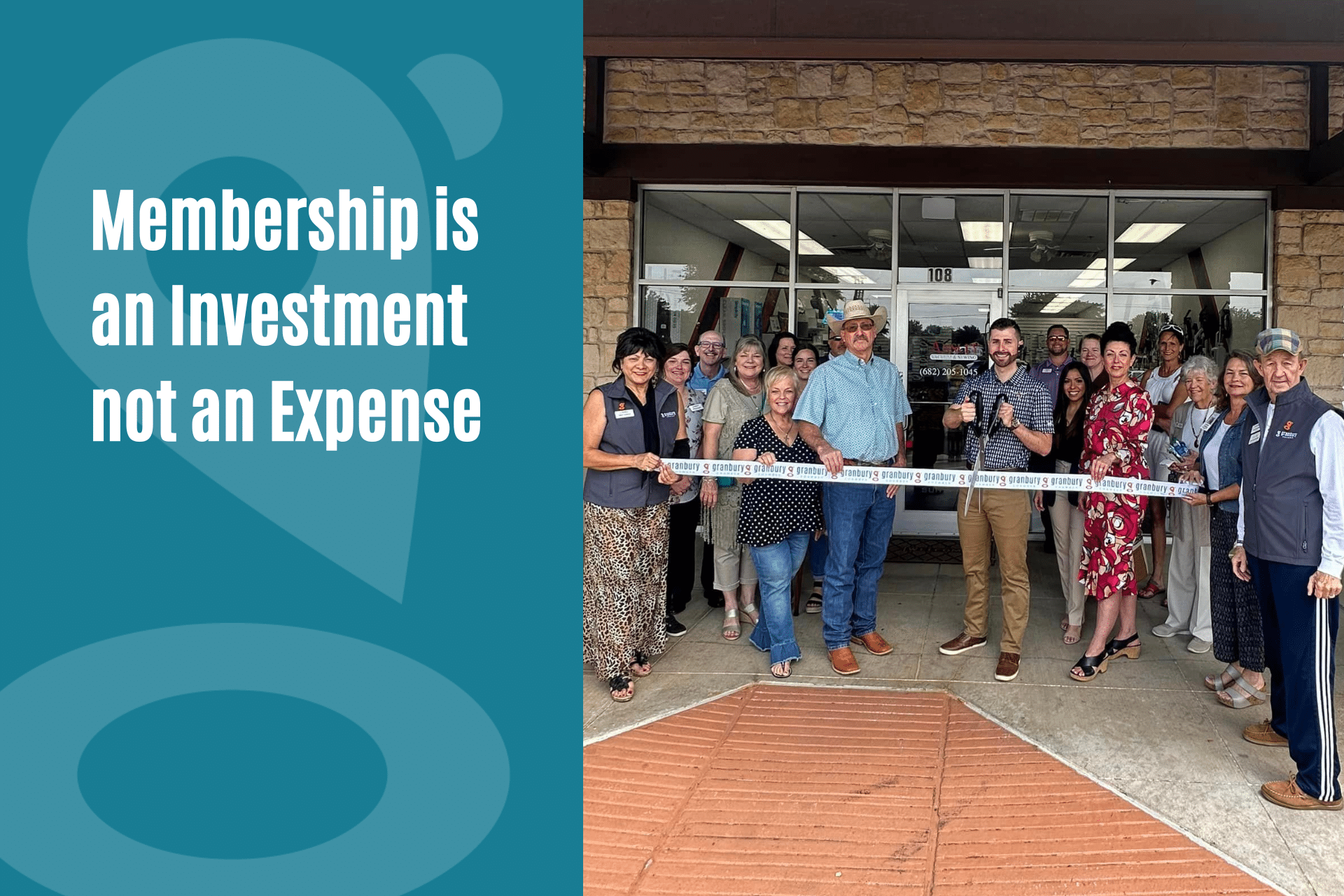
Membership Is An Investment, Not An Expense

Membership Is An Investment, Not An Expense

Membership Is An Investment, Not An Expense

Membership organizations, like a chamber of commerce, are undergoing dramatic transformations as a number of companies, nonprofits, and service businesses create monthly membership levels as a way to build cash flow and encourage doing business with them.  For decades, there were chambers of commerce, civic clubs like Rotary, Kiwanis, and Optimists as well as fraternal organizations that were membership based.  The proliferation of ‘member benefits’ has caused chambers of commerce to reassess their relationships with their members.

The Granbury Chamber of Commerce spent decades on a membership platform that was based on the number of employees that a business had.  If you had 1-5 employees, members paid the lowest rate; however, if you had 100+ employees, the membership was significantly higher.  The theory was simple—larger businesses can afford to pay more, and if you were a financial institution, not only did you pay a higher rate, but you also paid an amount based on the deposits in your bank.  It was not unusual for banks in the 1990s and early 2000s to pay upwards of $100,000 for chamber memberships in larger metro areas.

Even though memberships were based on the number of employees, the benefits that members received were identical at all levels.  Following the banking crisis in 2008, a significant number of banks began reassessing their investments in local chambers of commerce citing their financial commitment versus their implied benefits.  Thus, the tiered membership concept was born…any business could join at any level based on a series of direct and indirect benefits…the more that the company invested, the greater the number of benefits derived.  With a membership system like this, chambers of commerce quickly found that they could welcome any kind of business seeking membership-based benefits.

When the Granbury Chamber of Commerce transitioned to tier-based membership levels, we found that while most members continued to be basic business members, there were many more that valued the extra benefits that came with one, two, or three-tier higher memberships.  By placing a value on the services provided by the Chamber, we can offer members a variety of marketing options without asking for any additional monies.  This is why we talk about chamber membership as an investment and not an expense…and why joining a local chamber of commerce is still one of the best ways to build visibility for your company.

Written by VYBE Marketing